Key Takeaways
- Systemic Lockouts: Most CEX login failures are triggered by aggressive AI-driven security and strict KYC/AML compliance protocols rather than simple technical glitches.
- The Custodial Risk: Centralized exchanges act as gatekeepers; if you don't hold your private keys, you don't truly own your assets, making you vulnerable to "The Custodial Trap."
- Permissionless Trading: Decentralized Exchanges (DEXs) offer a superior alternative by using wallet-based authentication, ensuring you can never be blocked from your own capital.
- Advanced On-Chain Tools: Modern DeFi protocols now support professional-grade "Smart Trading" features like Stop-Loss and Take-Profit orders via transparent smart contracts.
Common Smart Trade Login Failures: Why You're Locked Out
It is a scenario every trader dreads: the market is moving, volatility is spiking, and you are ready to execute a critical move, only to find yourself staring at a "Login Failed" or "Account Suspended" notification. When your capital is on the line, every second spent troubleshooting feels like a lifetime.
These obstacles are rarely random. Centralized exchanges (CEXs) operate within a rigid framework of regulatory requirements, utilizing aggressive security AI that can flag even legitimate users as potential risks. Understanding why these blocks happen is the first step toward reclaiming control over your trading experience.
Technical Triggers and Security Red Flags
Most Smart Trade Login Troubleshooting issues stem from automated systems designed to prevent unauthorized access. However, these systems often lack nuance. If your login behavior deviates even slightly from your established pattern, the platform’s security algorithms may trigger an immediate lockout.
The most frequent culprits include:
- IP Anomalies and Geofencing: If you travel or use a VPN that routes your traffic through a restricted jurisdiction, the exchange may flag your account for violating geographic service agreements.
- Failed 2FA and MFA Desynchronization: Losing access to an authenticator app or failing to enter a code correctly multiple times is a leading cause of lockouts.
- Phishing and Domain Errors: Attackers frequently register lookalike domains to steal login data, which triggers security freezes once the exchange detects a compromise.
- Session Persistence Issues: For those trading derivatives, session timeouts or high-latency reconnections during server hiccups can lead to failed logins.
💡 Trader's Insight: While security is important, excessive "false positives" kill your trading flow. In high-frequency markets, friction is the enemy. Learn how latency impacts profitability in The 0.5 Second Rule: Why “One-Tap Execution” is the Holy Grail.
🔐 Visualizing the "Block" Logic
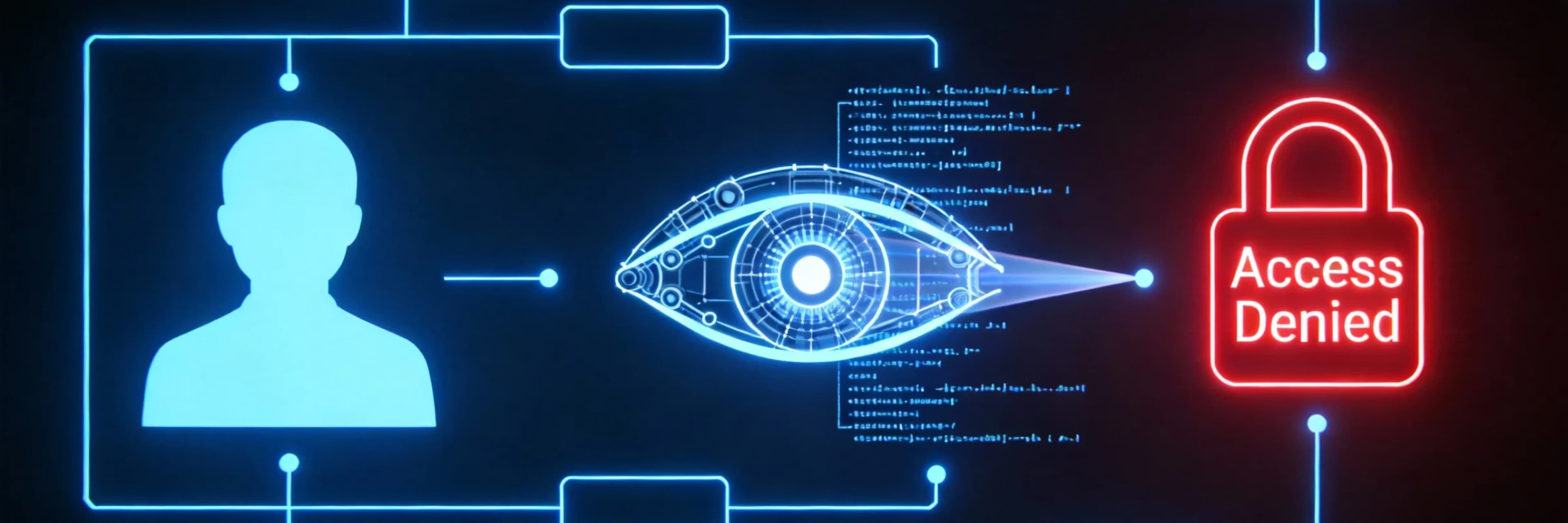
| Stage | What Happens | Potential Trigger | Result |
|---|---|---|---|
| 1. Login Request | User enters credentials | New IP / VPN / Device Change | Flagged |
| 2. AI Assessment | Bot analyzes risk score | "Unusual Behavior" Pattern | Review |
| 3. Decision | Automated Gatekeeper acts | Risk Score > Threshold | LOCKOUT |
Most "Login Failed" errors are actually Step 3: The AI deciding you are too risky to trade.
The Invisible Hand: How AI and KYC/AML Regulations Trigger Blocks
While it may feel like a personal affront, these disruptions are often the result of a complex, automated ecosystem designed to enforce financial risk mitigation. Centralized brokers are increasingly beholden to strict regulatory frameworks, such as the CLARITY Act, leading them to deploy sophisticated Artificial Intelligence to police user behavior in real-time.
The Rise of AI-Driven Compliance and "Overblocking"
In the modern financial landscape, traditional rule-based systems have been replaced by AI-driven anomaly detection. These systems analyze vast datasets to identify patterns that human auditors might miss, such as "behavioral deviation" and "transaction velocity."
However, this "Invisible Hand" is often tuned conservatively. Because the cost of a regulatory fine for a KYC/AML lapse far outweighs the loss of a single customer’s commission, platforms often prioritize "false positives" over user accessibility. Your account might be restricted not for something you did, but because your profile matches a "predictive" risk pattern identified by a black-box algorithm.
The Custodial Trap: The Risk of 'Not Your Keys, Not Your Crypto'

If you are currently searching for a troubleshooting guide because your account has been frozen, you are experiencing the primary vulnerability of the CeFi vs DeFi trade-off. The convenience of centralized exchanges comes with a hidden, high-stakes cost: you do not actually own your assets; you own a claim to assets held by a third party.
This is the "Custodial Trap." When you use a custodial wallet, the exchange holds the private keys. You are essentially a guest in your own financial house, and the landlord can change the locks at any time without notice.
The Illusion of Ownership
The golden rule of the industry is simple: "Not your keys, not your crypto." Unlike traditional bank accounts in the United States, crypto exchange accounts are not FDIC insured. If an exchange becomes insolvent or decides to "pause" trading to maintain its own liquidity, your capital is trapped. To truly secure your portfolio, the transition to non-custodial wallets is essential. By holding your own private keys, you remove the middleman from the equation.
🛡️ Strategic Shift: Moving away from custodial exchanges is the only way to guarantee access. See our detailed comparison on why traders are migrating in DEX vs. CEX: Finding the Ultimate Battleground.
How DEXs Solve Login Issues Through Permissionless Access
Decentralized exchanges (DEXs) utilize a permissionless access model that removes the intermediary entirely. In the centralized world, a "login" is a request for permission. In contrast, DEXs use your digital wallet as your identity.
Wallet-Based Authentication
- No Central Authority: There is no "admin" who can reset your password or disable your "login."
- Cryptographic Ownership: Your access is tied to your private keys. As long as you possess your seed phrase, you have an immutable right to trade.
- Global Participation: Access professional-grade trading tools regardless of your physical location, bypassing the geofencing issues that plague CEX users.
The shift toward DeFi isn't just about avoiding technical glitches; it’s about reclaiming sovereignty. Because these platforms are built on permissionless architectures, they eliminate single points of failure.
Smart Trading on DEXs: Executing Stop-Loss and Take-Profit On-Chain
A common misconception is that DEXs are limited to simple "swaps." However, the evolution of smart contract protocols has transformed the landscape. Today, you can execute complex orders entirely on-chain.
Mechanics of On-Chain Execution
Unlike traditional Automated Market Makers (AMMs), modern perpetual DEXs utilize an on-chain order book.
- Stop-Loss Orders: Smart contracts monitor real-time price feeds via decentralized Oracles. If the price hits your trigger, the contract automatically executes the trade.
- Atomic Execution: Trades are executed as "atomic swaps." If the conditions are met, the assets swap simultaneously. If not, the assets remain in your secure custody.
By moving your strategy on-chain, you gain access to automated trading systems that work 24/7, governed by transparent code rather than unpredictable corporate policies.
🚀 Speed & Strategy: Automation requires precision. Discover how to use these tools to catch micro-trends in The Art of Momentum Trading.
CEX vs. DEX: Choosing the Right Security Model for 2026
As we look toward 2026, the choice between CEX and DEX is a strategic decision based on your risk tolerance.
⚔️ Risk Model Comparison
| Feature | Centralized Exchange (CEX) | Decentralized Exchange (DEX) |
|---|---|---|
| Custody | Custodial (Exchange holds assets) | Non-Custodial (You hold assets) |
| Access | Permissioned (KYC/Login Required) | Permissionless (Wallet Connect) |
| Security Risk | Counterparty Risk (Hacks/Insolvency) | Smart Contract Risk (Code Exploits) |
| Recovery | Support-Led (Password Reset available) | Key-Dependent (Lose seed = Lose funds) |
While CEXs offer a familiar "bank-like" experience and protect users from external hacks through managed security, they introduce the risk of account freezes. DEXs provide autonomy but place the full burden of security—such as protecting your seed phrase—on the user.
Transitioning to DeFi: A Step-by-Step Guide to Trading On-Chain
If you are ready to stop troubleshooting logins and start trading with full sovereignty, follow this practical guide to moving on-chain.
Step 1: Set Up Your Non-custodial Gateway
Choose a wallet like MetaMask or Phantom. Secure your seed phrase physically—never store it on a cloud service. This is your only "password" to the blockchain.
Step 2: Navigate the Liquidity Landscape
Don't hunt for prices manually. Use top-tier DEX aggregators to route your trades through multiple venues, ensuring the best execution and lowest slippage.
Step 3: Implement Professional Risk Management
Adopt strict position sizing. Never allocate more than 5% of your portfolio to a single protocol to mitigate the risk of Smart Contract Exploits. Use on-chain tools to set firm stop-losses and monitor your health ratios if using leverage.
Step 4: Master On-Chain Logistics
Remember to keep a "gas buffer" in your wallet (ETH, SOL, etc.) to cover transaction fees. As you learn to trade on-chain, you'll find that the initial learning curve is a small price to pay for the freedom from centralized gatekeepers.
FAQ
Q: Why is my "Smart Trade" login failing even though my password is correct? A: It is likely not a password issue but a security flag. CEXs use AI to monitor IP addresses, VPN usage, and behavioral patterns. If the system detects a "deviation," it may freeze the login to prevent potential fraud or to comply with geographic restrictions.
Q: Can a Decentralized Exchange (DEX) freeze my account? A: No. DEXs are permissionless and non-custodial. Because you interact directly with a smart contract using your own private keys, there is no central authority or "admin" who can block your access or prevent you from withdrawing your funds.
Q: Are DEXs as fast as centralized exchanges for active trading? A: While CEXs offer slightly lower latency because they trade off-chain, modern Layer 2 solutions and high-speed blockchains have made DEX trading nearly instantaneous, with the added benefit of immediate on-chain settlement.
Q: What is the biggest risk of moving to a DEX? A: The primary risks are personal key management and smart contract vulnerabilities. If you lose your seed phrase, your funds are gone forever. It is also vital to use audited, reputable protocols to minimize the risk of code exploits.
Q: Do I need to do KYC to use a DEX? A: Generally, no. Most DEXs allow you to trade simply by connecting your wallet. However, some platforms may offer "permissioned layers" for institutional users, but the core decentralized liquidity remains accessible to everyone globally.
Related Reading
This article is part of our comprehensive guide: The Speed Advantage: Why Sub-Second Execution Defines Modern Crypto Trading.
Discover the three layers of execution speed (hardware 15%, UI 50%, blockchain 35%), why Solana's 400ms confirmation beats Ethereum's 12 seconds, and how infrastructure advantage captures 3-5x more profit than skill alone.